For many Australians—especially self-employed professionals, contractors, and small business owners—proving income through traditional documentation can be challenging. Standard loan applications often require extensive financial statements, tax returns, and payslips. But what if your income structure doesn’t fit the conventional model?
This is where Low doc loans provide a practical alternative. Designed for borrowers with limited financial documentation, a Low doc loan offers flexibility while still enabling access to property, business, and vehicle finance.
In this guide, we’ll explore what a low doc loan is, its key benefits, seven important things to know about Low doc business loans in Australia, and how low doc car loans can support your financial goals.
What Is a Low Doc Loan?
A Low doc loan (short for “low documentation loan”) is a financing option tailored for individuals who may not have traditional proof of income, such as full tax returns or recent payslips.
Instead of relying solely on conventional documentation, lenders may accept:
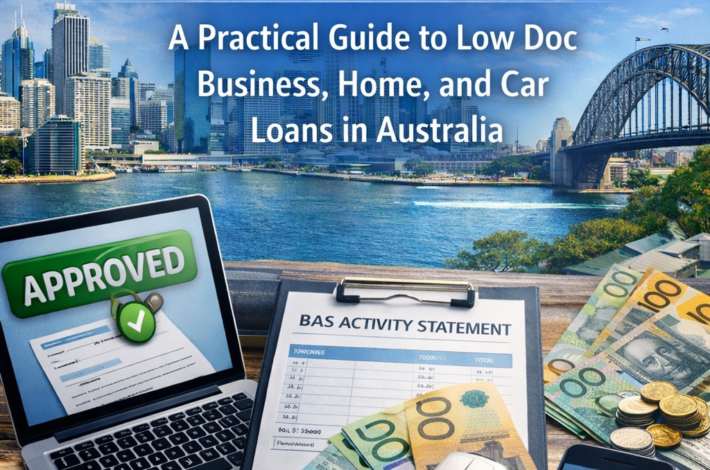
- Business Activity Statements (BAS)
- Bank statements
- Accountant declarations
- Asset statements
- ABN registration history
Low doc loans are particularly popular among:
- Self-employed professionals
- Small business owners
- Freelancers and contractors
- Commission-based earners
Unlike standard loans, the focus shifts from strict documentation requirements to overall financial strength and repayment capacity.
What Are the Benefits of Low Doc Loans?
Low doc loans offer several practical advantages.
1. Flexibility in Documentation
Borrowers can provide alternative proof of income, making it easier to qualify without extensive paperwork.
2. Faster Application Process
With fewer documents required, loan approval can often be quicker.
3. Access to Property Ownership
A Low doc home loan allows self-employed Australians to enter the property market even if their tax returns don’t reflect their current income strength.
4. Business Growth Opportunities
Low doc business loans help entrepreneurs secure funding for expansion, equipment purchases, or working capital.
5. Tailored Lending Options
Many lenders offer flexible terms suited to non-traditional income structures.
For tailored guidance and professional support, borrowers can explore financing options, which specialises in helping Australians navigate low doc lending solutions.
7 Things to Know About Low Doc Business Loans in Australia
If you’re considering Low doc loans for business purposes, here are seven essential factors to understand:
1. Interest Rates May Differ
Low doc loans may carry slightly higher interest rates compared to fully documented loans due to perceived lender risk.
2. Larger Deposits May Be Required
Lenders often request a higher deposit or stronger asset backing to offset documentation limitations.
3. Strong Cash Flow Is Critical
Even without full tax returns, lenders assess your cash flow through bank statements or BAS reports.
4. ABN History Matters
Most lenders require your ABN to have been registered for at least 12–24 months.
5. Credit History Still Counts
A solid credit record significantly improves your approval chances.
6. Professional Advice Helps
Working with a specialist who understands Low doc home loans and business lending options can streamline the process.
7. Transparency Is Key
Accurate financial disclosure builds trust with lenders and strengthens your application.
Low doc loans are not shortcuts—they are structured lending solutions for borrowers with alternative income documentation.
Low Doc Home Loans: A Smart Option for Self-Employed Australians
For many self-employed borrowers, taxable income may not reflect actual earnings due to legitimate business deductions. A Low doc home loan allows lenders to assess income differently, offering a more flexible pathway to home ownership.
Key advantages include:
- Alternative income verification
- Competitive loan terms
- Refinancing options
- Investment property opportunities
However, borrowers should evaluate long-term affordability and ensure repayment capacity aligns with business stability.
Low Doc Car Loans – What Are They and How Can They Benefit You?
Low doc lending is not limited to property or business. Low doc car loans provide similar flexibility for vehicle financing.
A low doc car loan allows borrowers to finance:
- Work vehicles
- Fleet vehicles
- Personal cars
- Commercial vehicles
Instead of traditional income proof, lenders assess:
- Bank statements
- ABN registration
- Business trading history
This article offers additional insight into how low doc car loans work and their benefits:
For tradespeople and small business operators, this can be especially beneficial when upgrading equipment or vehicles necessary for daily operations.
How to Approach Low Doc Lending Effectively
While Low doc loans provide flexibility, preparation remains essential.
Consider the Following Steps:
- Review your credit report
- Organise recent bank statements
- Confirm ABN history and business registration
- Assess your borrowing capacity
- Compare lenders and loan terms
It’s important to approach low doc lending with realistic expectations. While documentation requirements may be reduced, lenders still conduct responsible lending assessments.
Is a Low Doc Loan Right for You?
Low doc home loans and business loans are not one-size-fits-all solutions. They are best suited for borrowers who:
- Have strong cash flow but limited formal documentation
- Operate as sole traders or small businesses
- Require flexible lending assessment
- Understand loan terms and repayment commitments
If you fit this profile, a Low doc loan could open doors to property ownership, business expansion, or vehicle upgrades.
Conclusion: Flexible Lending for Modern Borrowers
In today’s evolving economy, traditional employment models no longer represent the majority of income earners. Low doc loans provide flexible, practical solutions for self-employed Australians and business owners who need financing without extensive paperwork.
Whether you’re exploring a Low doc home loan, business funding, or vehicle finance, careful preparation and professional guidance are key.