
Strategic Capital Access: The Ultimate Guide to Low Doc Financing for Self-Employed Australians

Securing credit through traditional banking channels is rarely straightforward for independent business operators, sole traders, and contractors. Conventional lenders require two consecutive years of fully lodged tax returns and audited financial statements paperwork that self-employed professionals often lack, either because their revenue is surging rapidly or because legitimate tax-minimization strategies suppress their taxable income. This documentation gap frequently stalls critical property purchases, business expansion, and equipment procurement.

Alternative lending structures bridge this gap. By utilizing flexible verification methods, low doc loans allow business owners to leverage true operational cash flow rather than historical tax filings to access growth capital.

What Is a Low Doc Loan And What Are Its Benefits?

A low documentation (low doc) loan is a specialized credit product designed for borrowers who have strong debt-servicing capacity but lack conventional PAYG payslips or recent tax returns. Rather than relying on traditional tax filings, specialist lenders assess serviceability using alternative financial records:

  • Business Activity Statements (BAS): Typically covering the past 6 to 12 months to verify gross business turnover.
  • Business Bank Statements: Demonstrating continuous trading revenue and cash flow health over a 6-to-12-month period.
  • Accountant’s Declaration: A formal letter signed by a registered tax agent confirming the business’s ongoing solvency and projected income.
  • Self-Declared Income Statement: A borrower declaration stating current annual earnings and repayment capabilities.

Industry Pro-Tip: Securing a low doc home loan does not mean bypassing credit checks or risk assessments. Lenders still evaluate your credit score, deposit size, and trading history, making clean banking conduct essential for securing competitive interest rates.

┌──────────────────────────────────────────────────────────┐
│              LOW DOC INCOME VERIFICATION PIPELINE         │
└────────────────────────────┬─────────────────────────────┘
                             │
       ┌─────────────────────┼─────────────────────┐
       ▼                     ▼                     ▼
┌──────────────┐      ┌──────────────┐      ┌──────────────┐
│ Business     │      │ 6-12 Months  │      │ Accountant   │
│ Activity     │      │ Trading Bank │      │ Solvency     │
│ Statements   │      │ Statements   │      │ Declaration  │
└──────────────┘      └──────────────┘      └──────────────┘

Strategic Comparison: Traditional vs. Low Doc Credit Facilities

Selecting the correct lending structure requires evaluating approval speed, documentation burden, and pricing parameters.

Feature / Attribute Full Documentation (Traditional) Low Documentation (Alternative)
Primary Income Proof 2 Years of Tax Returns + ATO Assessment Notices BAS, Bank Statements, or Accountant Declaration
Approval Speed 3 to 6 Weeks (Extensive manual underwriting) 3 to 10 Business Days (Streamlined verification)
Deposit Requirements (LVR) 5% to 20% Deposit (Up to 95% LVR) 20% to 30% Deposit (Generally capped at 70–80% LVR)
Interest Rate Margin Standard Commercial Benchmark 0.50% to 1.50% Above Standard Base Rates
Target Borrower PAYG Salary Earners & Established Entities Sole Traders, Freelancers, & Fast-Growing SMEs

7 Things to Know About Low Doc Business Loans in Australia

When applying for low doc loans to fund working capital or commercial property, keeping critical underwriting factors in mind will streamline approval:

  1. Active ABN Registration Requirements: Lenders require an active Australian Business Number (ABN) registered for a minimum of 12 to 24 months, along with active GST registration.
  2. Impact of APRA DTI Guidelines: Major banks enforce strict Debt-to-Income (DTI) caps, making non-bank lenders the primary funding source for self-employed applicants seeking flexible serviceability rules.
  3. BAS vs. Bank Statement Options: Providing 12 months of consecutive BAS statements often yields sharper interest rates than relying solely on bank statements or accountant declarations.
  4. Deposit Size Dictates Pricing: Maintaining a Loan-to-Value Ratio (LVR) below 70% lowers lender risk, often unlocking rates competitive with standard commercial products.
  5. Tax Deductibility of Interest: Interest expenses incurred on business-purpose loans are generally tax-deductible, offsetting higher nominal interest rates.
  6. Lenders Mortgage Insurance (LMI): Borrowing over 60%–70% of a property’s value on a low doc basis may trigger LMI premiums, which can be capitalized into the total loan amount.
  7. Refinancing Pathways: Many business owners use low doc funding as a short-to-medium term solution, later refinancing into standard full-doc products once two years of tax returns are lodged.

Low Doc Car Loans: What Are They and How Can They Benefit You?

Acquiring commercial vehicles or fleet machinery through traditional channels can stall operations while waiting for annual accounts to be finalized. Low doc asset finance provides a streamlined path to acquiring income-producing assets without delaying business expansion.

              ┌──────────────────────────────────────────┐
              │      LOW DOC CAR FINANCE ADVANTAGES       │
              └────────────────────┬─────────────────────┘
                                   │
         ┌─────────────────────────┼─────────────────────────┐
         ▼                         ▼                         ▼
┌──────────────────┐      ┌──────────────────┐      ┌──────────────────┐
│ Rapid Approval   │      │ Preserves Cash   │      │ Tax-Effective    │
│ & Settlement     │      │ Working Capital  │      │ Asset Depr.      │
└──────────────────┘      └──────────────────┘      └──────────────────┘

Core benefits for business operators include:

  • Minimal Documentation Requirements: Approvals can often be secured using an active ABN, driving history, and a signed income declaration—eliminating the need for comprehensive financial statements.
  • Preservation of Working Capital: Vehicle purchases can be financed with zero upfront deposit, keeping operational cash reserves intact for business growth.
  • Tax-Effective Asset Structuring: Commercial vehicle finance (chattel mortgage) allows business owners to claim tax deductions on both loan interest and equipment depreciation.
  • Fast Turnaround: Streamlined underwriting enables vehicle delivery within days, keeping sales teams, trade crews, and delivery routes fully operational.

Key Takeaway: Low doc financing shifts the credit assessment from historical tax records to real-time operational performance, helping self-employed Australians secure property, business assets, and growth capital without administrative delays.

Scaling Your Enterprise with Flexible Capital

Low documentation financing offers self-employed professionals, contractors, and business owners a practical path past rigid traditional lending hurdles. By assessing current cash flow through BAS statements and business accounts rather than historical tax returns, alternative facilities provide the liquidity needed to capture market opportunities. Evaluating your current trading position against alternative lending models allows you to unlock capital, acquire key assets, and scale your operations with confidence.
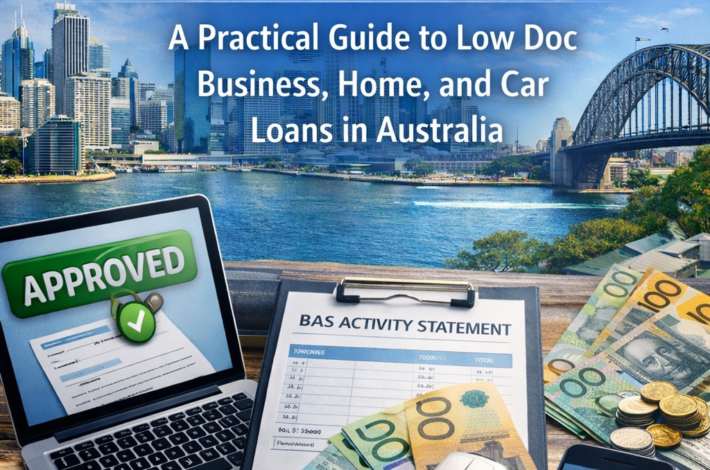

A Practical Guide to Low Doc Business, Home, and Car Loans in Australia

For many Australians—especially self-employed professionals, contractors, and small business owners—proving income through traditional documentation can be challenging. Standard loan applications often require extensive financial statements, tax returns, and payslips. But what if your income structure doesn’t fit the conventional model?

This is where Low doc loans provide a practical alternative. Designed for borrowers with limited financial documentation, a Low doc loan offers flexibility while still enabling access to property, business, and vehicle finance.

In this guide, we’ll explore what a low doc loan is, its key benefits, seven important things to know about Low doc business loans in Australia, and how low doc car loans can support your financial goals.

What Is a Low Doc Loan?

A Low doc loan (short for “low documentation loan”) is a financing option tailored for individuals who may not have traditional proof of income, such as full tax returns or recent payslips.

Instead of relying solely on conventional documentation, lenders may accept:

  • Business Activity Statements (BAS)
  • Bank statements
  • Accountant declarations
  • Asset statements
  • ABN registration history

Low doc loans are particularly popular among:

  • Self-employed professionals
  • Small business owners
  • Freelancers and contractors
  • Commission-based earners

Unlike standard loans, the focus shifts from strict documentation requirements to overall financial strength and repayment capacity.

What Are the Benefits of Low Doc Loans?

Low doc loans offer several practical advantages.

1. Flexibility in Documentation

Borrowers can provide alternative proof of income, making it easier to qualify without extensive paperwork.

2. Faster Application Process

With fewer documents required, loan approval can often be quicker.

3. Access to Property Ownership

A Low doc home loan allows self-employed Australians to enter the property market even if their tax returns don’t reflect their current income strength.

4. Business Growth Opportunities

Low doc business loans help entrepreneurs secure funding for expansion, equipment purchases, or working capital.

5. Tailored Lending Options

Many lenders offer flexible terms suited to non-traditional income structures.

For tailored guidance and professional support, borrowers can explore financing options, which specialises in helping Australians navigate low doc lending solutions.

7 Things to Know About Low Doc Business Loans in Australia

If you’re considering Low doc loans for business purposes, here are seven essential factors to understand:

1. Interest Rates May Differ

Low doc loans may carry slightly higher interest rates compared to fully documented loans due to perceived lender risk.

2. Larger Deposits May Be Required

Lenders often request a higher deposit or stronger asset backing to offset documentation limitations.

3. Strong Cash Flow Is Critical

Even without full tax returns, lenders assess your cash flow through bank statements or BAS reports.

4. ABN History Matters

Most lenders require your ABN to have been registered for at least 12–24 months.

5. Credit History Still Counts

A solid credit record significantly improves your approval chances.

6. Professional Advice Helps

Working with a specialist who understands Low doc home loans and business lending options can streamline the process.

7. Transparency Is Key

Accurate financial disclosure builds trust with lenders and strengthens your application.

Low doc loans are not shortcuts—they are structured lending solutions for borrowers with alternative income documentation.

Low Doc Home Loans: A Smart Option for Self-Employed Australians

For many self-employed borrowers, taxable income may not reflect actual earnings due to legitimate business deductions. A Low doc home loan allows lenders to assess income differently, offering a more flexible pathway to home ownership.

Key advantages include:

  • Alternative income verification
  • Competitive loan terms
  • Refinancing options
  • Investment property opportunities

However, borrowers should evaluate long-term affordability and ensure repayment capacity aligns with business stability.

Low Doc Car Loans – What Are They and How Can They Benefit You?

Low doc lending is not limited to property or business. Low doc car loans provide similar flexibility for vehicle financing.

A low doc car loan allows borrowers to finance:

  • Work vehicles
  • Fleet vehicles
  • Personal cars
  • Commercial vehicles

Instead of traditional income proof, lenders assess:

  • Bank statements
  • ABN registration
  • Business trading history

This article offers additional insight into how low doc car loans work and their benefits:
For tradespeople and small business operators, this can be especially beneficial when upgrading equipment or vehicles necessary for daily operations.

How to Approach Low Doc Lending Effectively

While Low doc loans provide flexibility, preparation remains essential.

Consider the Following Steps:

  • Review your credit report
  • Organise recent bank statements
  • Confirm ABN history and business registration
  • Assess your borrowing capacity
  • Compare lenders and loan terms

It’s important to approach low doc lending with realistic expectations. While documentation requirements may be reduced, lenders still conduct responsible lending assessments.

Is a Low Doc Loan Right for You?

Low doc home loans and business loans are not one-size-fits-all solutions. They are best suited for borrowers who:

  • Have strong cash flow but limited formal documentation
  • Operate as sole traders or small businesses
  • Require flexible lending assessment
  • Understand loan terms and repayment commitments

If you fit this profile, a Low doc loan could open doors to property ownership, business expansion, or vehicle upgrades.

Conclusion: Flexible Lending for Modern Borrowers

In today’s evolving economy, traditional employment models no longer represent the majority of income earners. Low doc loans provide flexible, practical solutions for self-employed Australians and business owners who need financing without extensive paperwork.

Whether you’re exploring a Low doc home loan, business funding, or vehicle finance, careful preparation and professional guidance are key.

7 Things to Know About Low Doc Business Loans in Australia

7 Things to Know About Low Doc Business Loans in Australia

Loan doc loans are a popular choice for many today. It’s easy to see why so many look to these loans. Everyone needs a loan, whether it’s for their business, buying a vehicle, or making necessary improvements at home. Unfortunately, obtaining a loan comes with a mountain of paperwork and frustration. Some people aren’t eligible for a traditional loan and that can leave them in a vulnerable position. Fortunately, low documentation loans give everyone a viable alternative. So, what do you need to know about these loans?

Less Documentation is Required

If you have ever applied for a standard bank loan (or any loan from a high-street lender) you’ll know there is a lot of paperwork involved. Lenders want to be sure you’re a solid investment and that you will be able to repay them. Unfortunately, lending institutes often want lots of documents to back your payment abilities. Often, you don’t have these things and can be turned down for the loan. A low doc loan doesn’t always need a mountain of paperwork to back your application. That can be incredibly useful and may make the process a little less stressful too.

Great Opportunity for Small Businesses

What you might not realise is that businesses often need help from time as finances can be stretched. Unfortunately, many small businesses do not have many options open to them. It’s partly down to their limited history in business, as well as other factors. Fortunately, low doc loans could be the answer. Small businesses could find a great way to provide additional funding for their business when they need it most.

Eligibility Depends on Several Factors

A lot of people wrongly assume that since they are self-employed, they’re guaranteed to be accepted for low doc loans. That, however, isn’t quite true. Lenders don’t have to accept any borrower or application. It can be based on a discretionary footing. Some will consider a range of factors before approval is given.

Collateral isn’t Usually Required

Even though you are applying for an alternative loan, you don’t (typically) need collateral. You don’t always understand the significance of this because few people have ways to secure a loan. A low doc loan can provide a viable alternative. It’s great because it means you won’t have to find something to act as collateral.  

Low Doc Loans Offer Greater Flexibility

Flexibility is not something most people have when they take out a standard bank loan. While you can pay a lump sump towards any loan, some companies frown upon it (if it ends the loan early). Essentially, the lender is missing out on interest, and it isn’t what they want. Some will end add a fee for paying the loan back early. With a low doc loan, this can be avoided. You get greater flexibility over payment. You can read more about What Is a Low Doc Loan and What Are Its Benefits? by visiting https://www.northgatechamber.com/what-is-a-low-doc-loan-and-what-are-its-benefits/

There are Different Types of Low Documentation Loans

There are Different Types of Low Documentation Loans

Low doc loans come in many forms, including no doc and lease doc loans. They each have their advantages and can be unique in many ways. You will need to find a good lender with a suitable loan, however. You must do this to ensure the right loan is found.

You Must Pay the Loan Back

Whenever you take out a loan, it must be paid back – on time and without delay. Any missed payments can have serious consequences on your credit and financial history. While a low doc loan tends to offer flexibility, lenders aren’t happy with borrowers who fail to pay. It will improve your credit rating and ensure you don’t put yourself in a vulnerable position. You can also read about What is the difference between a full doc and a low-doc loan? by clicking here.

Be a Smart Borrower

You probably don’t like the idea of borrowing money; unfortunately, it can be necessary in modern life. It can be frustrating to be turned down for a traditional bank loan. Often, it isn’t because you won’t pay (or don’t have the money to make the monthly payments), it’s down to your personal history. Sometimes, being self-employed or a freelancer shuts out viable financing options. It isn’t right but it happens. Low documentation loans can be a great alternative in many ways. You should take a close look at low doc loans and see if they can help you today.

Copyright North Gate Chamber 2026
Shale theme by Siteturner